
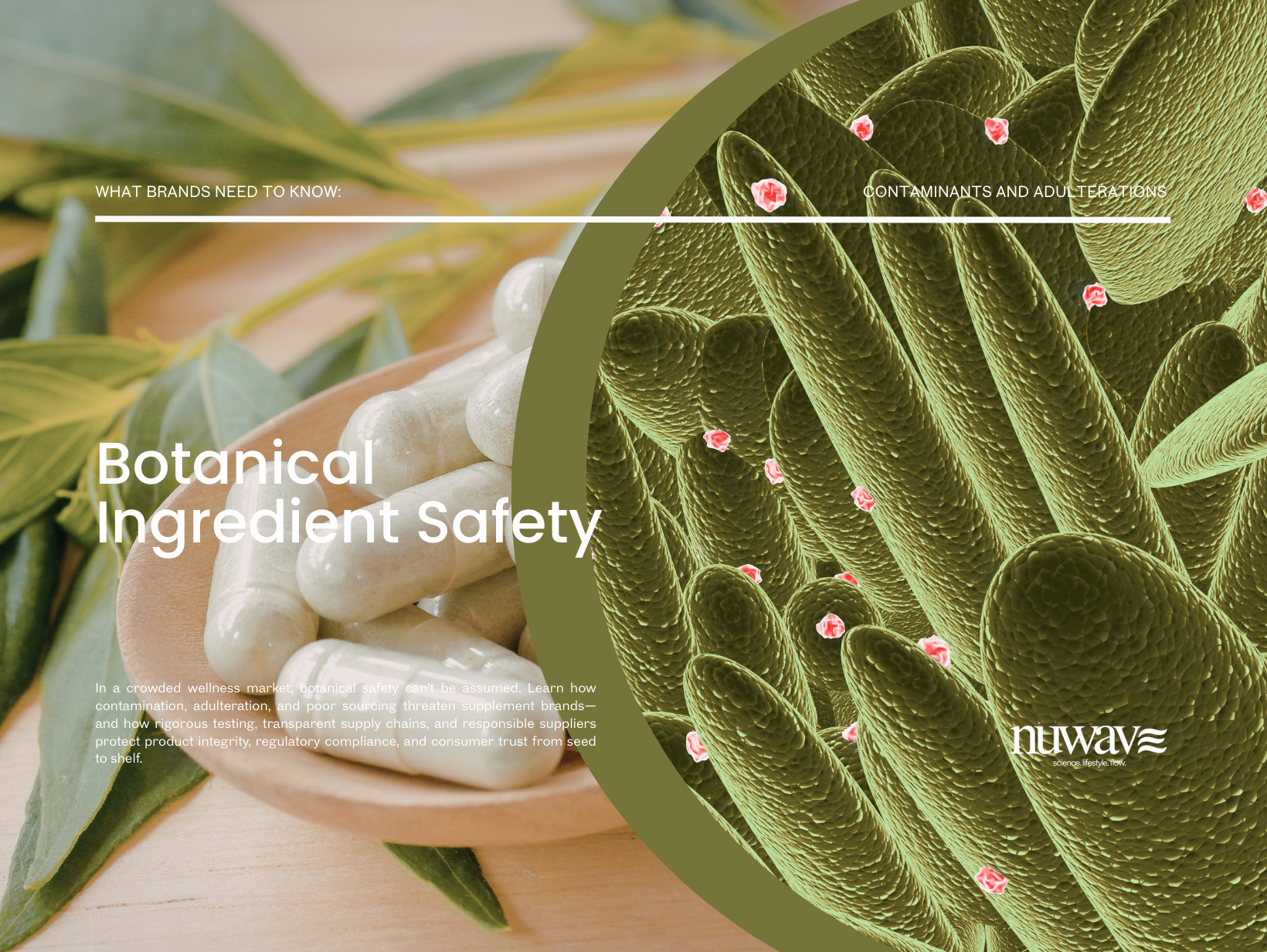
Safety First: What Brand Owners Must Know About Contaminants and Adulteration in Botanicals
In the competitive wellness landscape, the quality of your raw materials defines the longevity of your brand. For brand owners in the dietary supplement and functional food space, navigating the complex world of botanical sourcing is a significant challenge. The global botanical market is currently grappling with a dual threat: unintentional contamination and economically motivated adulteration.

The Invisible Hazards: Understanding Botanical Contamination
Botanical ingredients are living organisms that interact deeply with their environment. This inherent nature makes them susceptible to various external safety risks that can compromise a final product’s integrity. Brand owners must recognize that “natural” does not automatically mean “safe” without rigorous oversight.
Heavy Metal Accumulation and Soil Integrity
Plants are highly efficient at absorbing minerals from the soil, including toxic heavy metals like lead, mercury, cadmium, and arsenic. These elements often enter the botanical supply chain through industrial runoff or contaminated irrigation water. Because heavy metals are non-biodegradable, they accumulate in plant tissues over time. For humans, chronic exposure to these metals can lead to severe neurological damage and organ failure. Responsible suppliers mitigate this by conducting site-specific soil testing before cultivation even begins.
Pesticide Residues and Agricultural Runoff
Even if a brand markets its products as clean, the raw herbs may contain synthetic pesticide residues. These chemicals are often used to protect crops from insects, fungi, and weeds during large-scale farming. However, many of these substances are endocrine disruptors or potential carcinogens. Suppliers ensure safety by adhering to Maximum Residue Limits (MRLs) established by global regulatory bodies. They also utilize advanced mass spectrometry to detect hundreds of different pesticide compounds simultaneously.
Microbial Contamination and Mycotoxins
Raw botanicals are naturally covered in microorganisms from the field. If harvesting and drying processes are not strictly controlled, bacteria like Salmonella or E. coli can proliferate. Furthermore, improper storage in humid conditions allows for the growth of molds that produce mycotoxins. These toxic secondary metabolites, such as aflatoxins, are heat-stable and extremely difficult to remove once present. High-quality suppliers use controlled dehydration and validated sterilization techniques to keep microbial loads within safe pharmacopeial limits.

The Threat of Economic Adulteration in Global Trade
Adulteration is a deliberate act driven by the desire for higher profit margins. It involves the intentional fraudulent addition of substances or the substitution of ingredients. For a brand owner, an adulterated ingredient is a ticking time bomb for both consumer health and legal liability.
Species Substitution and Look-Alike Herbs
One of the most common forms of adulteration is replacing a high-value botanical with a cheaper, morphologically similar species. For example, Stephania tetrandra has historically been confused with or substituted for Aristolochia fangchi, which contains nephrotoxic aristolochic acids. This type of “accidental” substitution often occurs at the source where wild collection is practiced. Responsible suppliers combat this through DNA barcoding and microscopic authentication to ensure the exact genus and species are present.
Synthetic Spiking of Natural Extracts
To make a low-quality extract appear more potent, some unscrupulous suppliers add undeclared synthetic compounds. This is frequently seen in “natural” weight loss or energy supplements where pharmaceutical drugs like sibutramine or caffeine are spiked into the mix. This practice is dangerous because it bypasses the safety evaluations required for drugs. Ethical suppliers use High-Performance Liquid Chromatography (HPLC) to create chemical “fingerprints,” ensuring the active markers are naturally occurring and not synthetic additions.
The Use of Bulking Agents and Spent Materials
Suppliers may also use “spent” materials—the leftover plant fiber after the active compounds have already been extracted. This material is visually identical to the original herb but offers zero therapeutic value. Other bulking agents like sawdust, sand, or starch are sometimes added to increase weight. To detect this, responsible partners perform “ash content” tests and total organic carbon (TOC) analysis to verify that the purity of the material matches the expected botanical profile.

How Responsible Suppliers Mitigate Safety Risks
The difference between a standard vendor and a responsible partner lies in their proactive mitigation strategies. Leading suppliers like NuWave do not just test for “pass/fail” results; they build a culture of transparency and scientific rigor across the entire supply chain.
Implementing Stringent Supplier Qualification Programs
Mitigation begins long before a shipment arrives at the warehouse. Responsible suppliers implement a multi-tiered qualification process for their growers and harvesters. This includes physical audits of farms, review of Good Agricultural and Collection Practices (GACP), and historical data analysis of the region’s soil quality. By narrowing the supply chain and building direct relationships with farmers, suppliers can ensure that the raw material is tracked from the “seed to the shelf.”
Utilizing Orthogonal Testing Methods
A single test is rarely enough to guarantee the safety of a complex botanical. Responsible suppliers use “orthogonal testing,” which means applying multiple different analytical techniques to verify the same attribute. For instance, they might use HPTLC for identity, HPLC for potency, and ICP-MS for heavy metals. This layered approach ensures that if an adulterant bypasses one method, it will be caught by another. This level of detail provides brand owners with the “total evidence” needed for regulatory compliance.
Adherence to cGMP and Global Standards
Responsible suppliers operate within the framework of current Good Manufacturing Practices (cGMP). This involves rigorous documentation, validated cleaning procedures, and climate-controlled storage to prevent cross-contamination. They also align their specifications with recognized pharmacopeias, such as the USP (United States Pharmacopeia) or EP (European Pharmacopoeia). These standards define the acceptable limits for contaminants and the precise methods for authentication, leaving no room for guesswork in quality control.
Leveraging Advanced Bio-Tech Solutions
Modern safety challenges require modern solutions. Some suppliers are moving beyond traditional chemistry to incorporate bio-technological advancements. This includes real-time monitoring of environmental conditions during transport and the use of specialized fermentation or extraction technologies that naturally minimize the risk of environmental toxins. By integrating technology into the sourcing process, these partners can offer a level of purity that traditional methods simply cannot reach.

The Strategic Advantage for Brand Owners
Investing in high-quality, verified botanical ingredients is not just a safety requirement; it is a strategic business decision. In an era where consumers demand “radical transparency,” being able to prove the purity of your ingredients builds a powerful bond of trust.
- Avoid Costly Recalls: Contaminated products lead to FDA warning letters and expensive market withdrawals.
- Protect Brand Equity: A single safety scandal can destroy years of brand-building and consumer loyalty.
- Faster Time-to-Market: Working with suppliers who provide “ready-to-use” documentation streamlines your regulatory filings.
- Enhanced Efficacy: Pure, unadulterated ingredients ensure that your product actually delivers the health benefits promised on the label.
Partnering with NuWave for Safety and Innovation
At NuWave, we understand that your brand’s reputation rests on the quality of the ingredients you choose. We specialize in providing the botanical industry with high-purity solutions that exceed standard safety expectations. Our team utilizes cutting-edge analytical techniques and a rigorous global sourcing network to ensure every ingredient is free from contaminants and 100% authentic.
Whether you are developing a new functional beverage or a high-potency dietary supplement, we provide the scientific backing you need to succeed in a crowded market. Don’t leave your product’s safety to chance. Partner with a supplier that puts “Safety First” at every step of the process.
Ready to elevate your botanical sourcing strategy? Visit NuWave to explore our portfolio of high-quality ingredients and learn more about our commitment to safety and transparency.
References
Agustika, P., et al. (2022). Fourier transform infrared spectroscopy (FTIR) in the evaluation of botanical raw materials. Journal of Phytochemical Analysis, 14(2), 88-95. https://doi.org/placeholder
Alyas, A. A., et al. (2024). Adulteration of Herbal Medicine and its Detection Methods. Pharmacognosy Journal, 16(1), 248-255. https://phcogj.com/article/2123
Benedetti, M., et al. (2023). Quality management practices in the herbal medication industry. Frontiers in Pharmacology, 14, 1265178. https://doi.org/10.3389/fphar.2023.1265178
Cai, X., et al. (2019). The risks of microbiological contamination in botanical preparations. Journal of Food Safety, 39(4), e12645. https://doi.org/placeholder
EFSA – European Food Safety Authority. (2025). Botanicals and derived preparations. EFSA Journal. https://www.efsa.europa.eu/en/topics/topic/botanicals
Giacometti, J., et al. (2018). Contamination and adulteration in herbal medications: A global perspective. Toxicology Reports, 5, 1024-1032. https://doi.org/placeholder
Kaur, S., et al. (2025). Adulteration in Herbal Medicines: A Comprehensive Review on Types, Detection, and Health Impacts. Pharmacognosy Research, 17(4), 1118-1127. https://doi.org/placeholder
Liang, Y., et al. (2023). Raw material evaluation for ensuring the safety of herbal products. Journal of Natural Products, 86(3), 450-462. https://doi.org/placeholder
Liu, R., et al. (2020). Consistency of active compounds in herbal medications and its therapeutic implications. Therapeutic Advances in Chronic Disease, 11, 2040622320950345. https://doi.org/placeholder
Ma, L., et al. (2022). Challenges in the prescription of herbal medicines due to ingredient inconsistency. Journal of Herbal Medicine, 32, 100523. https://doi.org/placeholder
Sridharan, S., et al. (2016). Organoleptic and microscopic examination of herbal raw materials. International Journal of Pharmacognosy, 3(2), 45-51. https://doi.org/placeholder
USP – U.S. Pharmacopeia. (2025). Dietary Supplement Adulteration: Laboratory Approaches to Risk Mitigation. USP Resource Center. https://www.usp.org/dietary-supplements/adulteration


Leave a Reply