
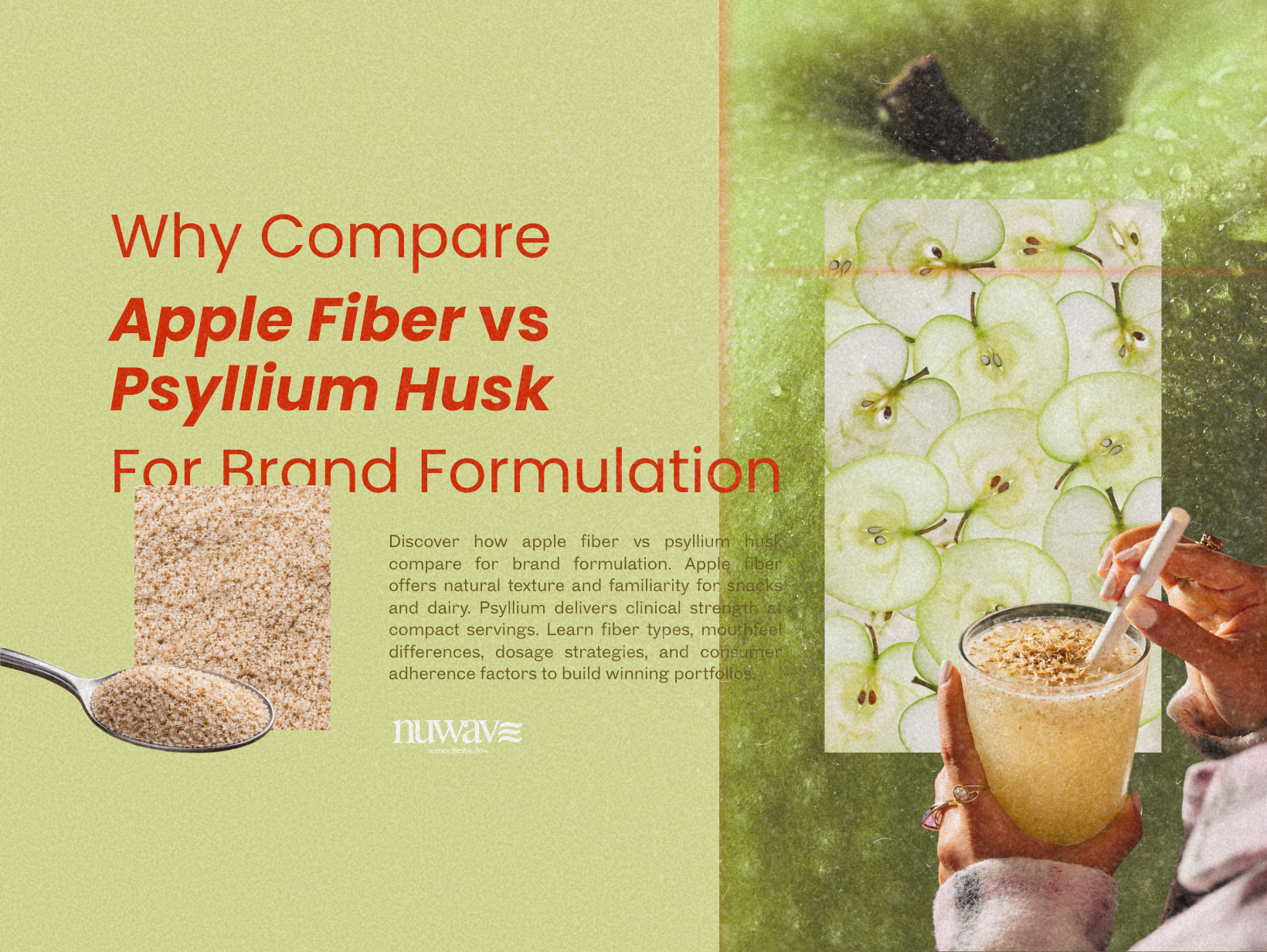
Fiber enriched products are shifting from niche launches to mainstream portfolio essentials for many health focused brands today. Product developers now look beyond total fiber grams and evaluate texture, mouthfeel, and ease of use in different formats. Apple fiber and psyllium husk both support digestive wellness but behave very differently in real product applications. Understanding their functional and sensory differences helps brands design products that consumers will actually finish and repurchase.
For formulators, the question is no longer whether to add fiber, but which fiber mix to use for clear positioning. Apple fiber often appears in snacks and bakery, while psyllium dominates supplement aisles and medical nutrition formats. Each ingredient brings its own balance of soluble and insoluble fractions, hydration behavior, and gel forming capacity. These characteristics directly shape portion sizes, label claims, and perceived value per serving across categories.

Fiber Type: Soluble vs Insoluble and Functional Behavior
Apple fiber usually derives from apple pomace, containing both soluble pectin and insoluble cell wall material like cellulose. Studies show apple pomace powders provide significant water holding capacity and moderate viscosity in hydrated food matrices. The soluble pectin fraction can contribute to gentle gelling and stabilization, while insoluble particles increase bulk and texture perception. A medium apple delivers around four to five grams of total fiber, highlighting its natural mixed fiber profile for product storytelling.
Psyllium husk, in contrast, is rich in highly viscous soluble fiber that forms strong gels upon hydration with water. This gel forming capability underpins psyllium’s documented benefits for stool frequency, cholesterol reduction, and glycemic modulation. Systematic reviews report psyllium can increase bowel movements by about three per week in chronic constipation populations. Clinically, psyllium often performs comparably or better than osmotic laxatives, which supports strong functional claims in supplements.
From a formulation view, apple fiber behaves more like a texturizer and bulking agent with mild viscosity changes. It supports structure, moisture retention, and antioxidant delivery in cereal bars, bakery goods, and dairy analogues. Psyllium behaves as a hydrocolloid, creating dense hydrogels that can structure low calorie foods and stabilize dispersed systems. This difference means psyllium can act as both active fiber and structuring agent, while apple fiber leans toward supportive functionality.

Texture and Mouthfeel: How Each Fiber Feels in Real Products
Texture is critical because consumers judge fiber products by palatability long before they experience digestive benefits. Apple fiber particles typically create a slightly grainy or pulpy mouthfeel but maintain familiarity for fruit based applications. Research in yogurt shows apple pomace addition can make gels firmer, more cohesive, and higher in viscosity without excessive gelling. Sensory panels often describe apple pomace fortified products as thicker and more filling, yet still recognizable as conventional foods.
Extrusion processing can further modify apple pomace, increasing swelling and boosting viscosity up to dozens of times in dispersions. This allows developers to tune particle size and hydration behavior, balancing smoothness with visible fiber cues in finished products. Apple fiber therefore works well where brands want a natural fruit narrative and a subtly enhanced texture rather than a strong gel. Applications include bakery, cereals, fillings, gummies with fruit pieces, and high fiber yogurts for daily consumption.
Psyllium husk creates a very different sensory experience, characterized by strong thickening and gel formation after hydration. At relatively low inclusion levels, psyllium can yield dense networks with minimal porosity and high hardness in gelled matrices. Consumers often notice rapid thickening in drinks, along with a slippery or mucilaginous mouthfeel as the fiber hydrates. This texture can signal “high fiber” efficacy but may limit acceptance for casual snacking or indulgent product concepts.
In direct consumer studies, mixed fibers sometimes score similar or better on smoothness and palatability compared with psyllium alone. The same trial showed both psyllium and mixed fiber improved constipation, but gas and bloating differed between formulations. These findings suggest that blending psyllium with softer fibers like fruit derived options may support better long term compliance. Brand teams targeting repeat purchase should therefore consider pairing psyllium with more familiar texture contributors such as apple fiber.
Serving Size and Dose: How Much Fiber per Portion
Serving size drives label appeal, satiety perception, and realistic adherence for consumers using fiber products daily. Psyllium husk delivers high functional soluble fiber at relatively small serving sizes compared with many food based fibers. Guidance for supplements typically recommends five to ten grams of psyllium per day, divided into one or two servings. A rounded teaspoon of psyllium powder usually provides around three to four grams, simplifying scoop based dosing in powders.
Over the counter psyllium capsule products frequently deliver about 2.4 grams of soluble fiber per labeled serving. This concentrated dose supports cholesterol and laxation claims using only a few capsules or one spoonful of powder daily. Clinical data show that such doses can significantly increase complete spontaneous bowel movements in constipated adults. Therefore psyllium suits formats promising measurable outcomes at low daily volumes, including sticks, sachets, and capsules.
Apple fiber derived from pomace generally requires larger serving sizes to match total fiber delivered by concentrated psyllium. Food technologists often incorporate apple pomace at one to thirty percent of flour blends in bakery and cereal products. A single apple contains around four to five grams of fiber, but processed apple fiber powders can standardize this content per serving. In practice, apple fiber enriched products may deliver two to six grams of fiber per standard portion, depending on matrix and target claims.
This means apple fiber works best where consumers expect larger food portions, such as bars, cookies, cereals, and dairy snacks. Psyllium fits scenarios where brands want a compact “clinical style” dose, like functional shots, sachets, and medical nutrition products. For combination strategies, developers can use psyllium to reach therapeutic thresholds and apple fiber to provide volume and fruit identity. This approach supports attractive on pack numbers while still offering enjoyable textures and recognizable ingredient stories.

Consumer Experience: From First Sip to Long Term Adherence
Consumer experience spans sensory perception, tolerance, convenience, and perceived effectiveness over weeks of regular use. Apple fiber scores strongly on familiarity, since fruit based ingredients already appear widely in mainstream snacks and beverages. Studies in dairy show apple pomace can shorten fermentation time and enhance structure without compromising basic flavor expectations. The result is fiber fortified yogurt that still behaves like yogurt, which supports daily habitual consumption for wellness maintenance.
Because apple fiber combines soluble and insoluble fractions, it tends to support stool bulk and transit without extreme urgency. Mixed fiber products in clinical trials improved constipation metrics similarly to psyllium, suggesting comparable functional benefits. However, the same studies noted differences in gas and bloating, underlining that tolerance depends on dose and individual microbiota. Brand teams can use apple fiber to deliver more “gentle everyday regularity” messaging with lower risk of abrupt gastrointestinal responses.
Psyllium excels where measurable symptom relief is the main purchase driver, especially for constipation, cholesterol, and blood sugar control. Systematic reviews show psyllium can significantly increase stool frequency and perform similarly to pharmaceutical laxatives for many patients. Randomized trials also demonstrate improvements in stool consistency, straining effort, and overall bowel satisfaction with psyllium supplementation. These outcomes enable strong evidence supported claims that resonate with medically motivated or clinician guided consumers.
However, some users report gas, bloating, or dislike of the rapidly thickening texture, which can impact long term adherence. Psyllium products require careful hydration instructions, since insufficient water intake can reduce tolerability and consumer satisfaction. Brands may mitigate these issues through flavor systems, pleasant aromas, and formulations that slow down gelling in ready to mix formats. Positioning psyllium products as “functional rituals” rather than casual drinks can also align expectations with the therapeutic mouthfeel.
Application Fit: Matching Fiber Choice to Product Category
Different categories demand different balances of texture, dosage, and consumer expectations regarding taste and format. Apple fiber aligns well with “food first” strategies where fiber is embedded in everyday snacks and meal components. It integrates smoothly into bakery, cereals, fruit snacks, and cultured dairy, often improving structure, moisture, and antioxidant delivery. Brands can leverage apple origin stories, upcycled pomace positioning, and clean label narratives alongside fiber and polyphenol content.
Research on apple pomace valorisation highlights high fiber and polyphenol levels and improved texture in high fiber bakery prototypes. These data support claims around sustainability, waste reduction, and natural fortification, which matter for eco conscious consumers. Apple fiber therefore suits brands building lifestyle wellness lines that blend indulgence, familiarity, and subtle functionality. Portfolios can include granola, biscuits, gummies, or smoothies that consumers enjoy without feeling they are taking medicine.
Psyllium is ideal for formats where consumers accept intense functionality and clear dosage communication on the pack front. This includes powdered drink blends, capsules, fiber sticks, and medical nutrition formulations recommended by healthcare professionals. Studies show psyllium can also structure low fat foods and surimi based products through its strong gel forming behavior. That allows creative crossovers, such as high fiber plant based meats or savory snacks with added satiety and digestive benefits.
Blended strategies can place psyllium in flagship clinical lines while apple fiber enriches broader family friendly products. Such tiered portfolios help brands serve both symptom driven shoppers and general wellness consumers under one coherent fiber platform. Communication can highlight different “fiber profiles” for different needs, rather than promoting one universal hero ingredient. This segmentation helps reduce confusion and supports more personalized usage recommendations across digital and in store channels.

Strategic Comparison: Apple Fiber vs Psyllium Husk for Brands
| Dimension | Apple fiber key points | Psyllium husk key points |
| Fiber type | Mixed soluble and insoluble fractions from apple pomace, including pectin and cell wall material. | Predominantly soluble, highly viscous, strong gel forming fiber from Plantago ovata husks. |
| Texture impact | Adds bulk, slight grain, moderate viscosity, familiar fruit like mouthfeel in foods. | Creates thick gels, slippery mucilage, fast thickening in liquids, dense networks in gels. |
| Typical serving size | Higher inclusion in foods, often two to six grams fiber per portion depending on matrix. | Concentrated dose, generally five to ten grams per day, often in one or two servings. |
| Evidence for digestive effects | Mixed fiber studies show improved stool consistency and symptoms, comparable responder rates to psyllium. | Systematic reviews show increased bowel movements and strong evidence for constipation relief. |
| Ideal categories | Bakery, cereals, yogurts, fruit snacks, gummies, where “food first” and natural image matter. | Powders, capsules, medical nutrition, clinical style products with explicit dosing guidance. |
| Consumer perception | Seen as natural, upcycled, gentle, aligned with everyday wellness and sustainability narratives. | Seen as serious, therapeutic, sometimes less palatable but highly effective when used correctly. |
For most brands, the best question is not “apple fiber or psyllium” but “which ratio supports our positioning and category strategy”. Blending allows developers to combine psyllium’s clinical strength with apple fiber’s consumer friendly texture and fruit based storytelling. This combination can help products achieve target fiber claims without sacrificing sensory qualities essential for repeat purchase. It also gives marketing teams differentiated narratives for various lines under one consistent fiber architecture.
How Brands Can Move from Concept to Launch
Translating fiber science into winning products requires cross functional collaboration between R&D, regulatory, and marketing teams. Developers should begin with a clear benefit hierarchy, ranking regularity, cholesterol, satiety, and clean label priorities by segment. They can then map these priorities against functional properties of apple fiber and psyllium husk for each target format. Early prototype work should measure viscosity, water activity, and sensory acceptance alongside standard shelf life tests.
Regulatory specialists must confirm permissible claims for each market based on available clinical evidence and local rules. Psyllium trials often support structure function or disease risk reduction statements when wording follows reference studies. Apple fiber and pomace research supports claims related to fiber content, antioxidant contribution, and satiety perception in foods. Marketing teams should translate these technical advantages into consumer language that emphasizes comfort, routine, and taste satisfaction.
If your team wants to explore apple fiber, psyllium husk, or blended fiber systems for upcoming launches, expert partners can help design solutions. Specialist ingredient suppliers provide standardized apple fiber and psyllium grades with defined particle sizes and hydration behavior. They also support application trials across beverages, bakery, gummies, and clinical nutrition to align functionality with your desired claims. To discuss tailored fiber concepts for your brand in more detail, visit NuWave Bio and connect with the formulation team today.
Partnering with a dedicated ingredient and application specialist shortens development cycles and reduces costly reformulations before launch. You can align fiber selection, texture design, serving size, and consumer experience around one coherent, evidence grounded strategy from day one. For brands targeting Southeast Asia and global wellness consumers, now is an ideal time to refine your fiber portfolio architecture. Explore how apple fiber vs psyllium husk combinations can elevate your next generation products at NuWave today.
References
- Wang, X., Kristo, E., & LaPointe, G. (2019). The effect of apple pomace on the texture, rheology and microstructure of set type yogurt. Food Hydrocolloids, 91, 83–91. https://www.sciencedirect.com/science/article/abs/pii/S0268005X18317764
- Bijkerk, C. J., Liem, O., & Camilleri, M., et al. (2016). Soluble/insoluble fiber or psyllium for chronic constipation. World Journal of Gastroenterology, 22(4), 1067–1074. https://pmc.ncbi.nlm.nih.gov/articles/PMC4891216/
- Popescu, L., et al. (2022). Impact of Apple Pomace Powder on the Bioactivity, and the Textural and Sensory Properties of Stirred Yogurt. Foods, 11(22), 3565. https://pmc.ncbi.nlm.nih.gov/articles/PMC9689545/
- Gomez, M., et al. (2024). Valorisation of apple pomace for the development of high-fibre and antioxidant-rich cookies. Scientific Reports, 14, 21567. https://www.nature.com/articles/s41598-024-77377-8
- Schmid, M., & Karbstein, H. (2020). The Influence of Extrusion Processing on the Gelation Properties of Apple Pomace Dispersions: Involved Cell Wall Components and Their Gelation Kinetics. Foods, 9(11), 1647. https://pmc.ncbi.nlm.nih.gov/articles/PMC7692084/
- Geng, W., et al. (2024). Effect of Inulin and Psyllium Husk Powder on Gel Properties and Digestibility of Surimi-Based Products. Foods, 13(23), 3781. https://pmc.ncbi.nlm.nih.gov/articles/PMC11593437/
- Schoenfeld, P., et al. (2022). The Effect of Fiber Supplementation on Chronic Constipation in Adults: A Systematic Review and Meta-Analysis. American Journal of Gastroenterology, 117(7), 1154–1165. https://pmc.ncbi.nlm.nih.gov/articles/PMC9535527/
- ScienceDirect entry for “Developing psyllium fibre gel-based foods.” Food Hydrocolloids, 2021. https://www.sciencedirect.com/science/article/pii/S0268005X21005245
- DailyMed. (2014). Label: FIBER – psyllium husk capsule. https://dailymed.nlm.nih.gov/dailymed/drugInfo.cfm?setid=d5d1b0fb-8c8a-45f3-ae80-0c799d4d48ba
- Qin, Y., et al. (2021). Quality, physicochemical, and textural properties of dairy products supplemented with dietary fibers. Foods, 10(7), 1495. https://pmc.ncbi.nlm.nih.gov/articles/PMC8358338/
- Differences in physicochemical and functional properties of apple pomace fiber from different cultivars. Journal of the Science of Food and Agriculture. https://onlinelibrary.wiley.com/doi/10.1002/jsfa.70163


Leave a Reply